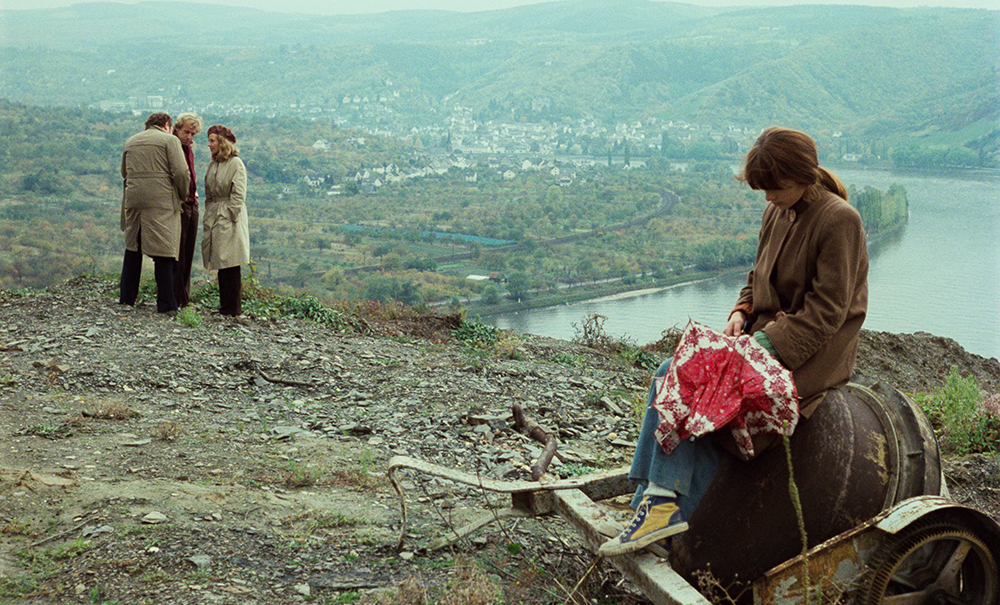
Last week, German film director Wim Wenders announced his decision to temporarily withdraw his 1975 picture Wrong Move from circulation on account of a topless scene featuring Nastassja Kinski who at the time of shooting was 13 years old. The decision followed the actor’s repeatedly voiced request for the sequence to be cut out, which the director dismissed on account of the film’s integrity. On Wednesday, in a statement released on his foundation’s website, he officially apologised to Kinski for not having protected her as a minor in the process of production, and in the previous week, in his acceptance speech at the German Film Awards where he was presented with a lifetime achievement accolade, he also acknowledged that he would have never shot the scene today.

For the sake of clarity, it should be noted that multiple English language media reports (e.g. The Guardian’s) failed to mention that the director’s decision is temporary, subject to an amicable solution he hopes to reach with the actor. The same media outlets happen to have left out a significant portion of the statement where Wenders concludes that “It is essential for our society to find appropriate ways of dealing with controversial films of the 20th century as well as embrace new learning processes and inclusive perspectives regarding cinema.” In the era of clear cut answers and convenient simplifications, such an omission does not exactly come as a surprise. The dominant “either-or” pattern of thinking by its very nature does not invite stirring the waters with calls for debate and appeals to common sense. But since I appreciate nuance and considered argumentation, at the risk of being called a contrarian (which might actually be an accurate description), I would like to take up on the filmmaker’s incentive and share a few thoughts on the subject.
It goes without saying that the former industry practice of hiring underage actors and expecting them to execute the creator’s vision in its entirety, including scenes of sexual nature, was morally wrong and had to be remediated. Naturally, the actor has all the right to express her distress at the time. If the scene were shot today, the performer would have been doubled or entirely substituted with an appropriately older counterpart. Luckily, at least in terms of legislation, we have advanced somewhat since those times and, again, there is no doubt that the actors who shared their experiences have played a greatly important role in protecting future generations from similar harm by enforcing the necessary changes.
However, the tidal wave of comments brought up by Wenders’s preemptive decision abounds with skin-deep judgments born from an atavistic desire to flood and sink the inconvenient object, and forget that it had ever existed. Very predictably, hardly any of the commenters lynching the film have even seen it, let alone cognitively interacted with it in an effort to understand the creator’s intent. In the culture based on assimilation of opinions, honest interpretive work is considered utterly superfluous once the given content has been (speculatively) deemed toxic matter requiring immediate treatment under threat of moral contamination. The goal is to single out and expel any potentially offensive or even mildly disturbing items at all cost.
In short: the real problem in this particular case of vigilante justice is not whether the now outdated practice is defensible or not (obviously, it cannot be justified, no matter the point in time), but rather why society that fixates on morality and the past while taking a great delight in self-approved excesses (ultra-violence, hypersexualisation etc.) feels such an overpowering urge to erase the evidence of historical wrongdoings. Oh, the paradox of swamp revenge! The answer is simple: having performed an act of rejection and disseminated it through all the relevant channels, self-professed guardians of the bog feel validated and elevated, and the lost comfort is restored, until the next detected transgression restarts the filtration cycle.
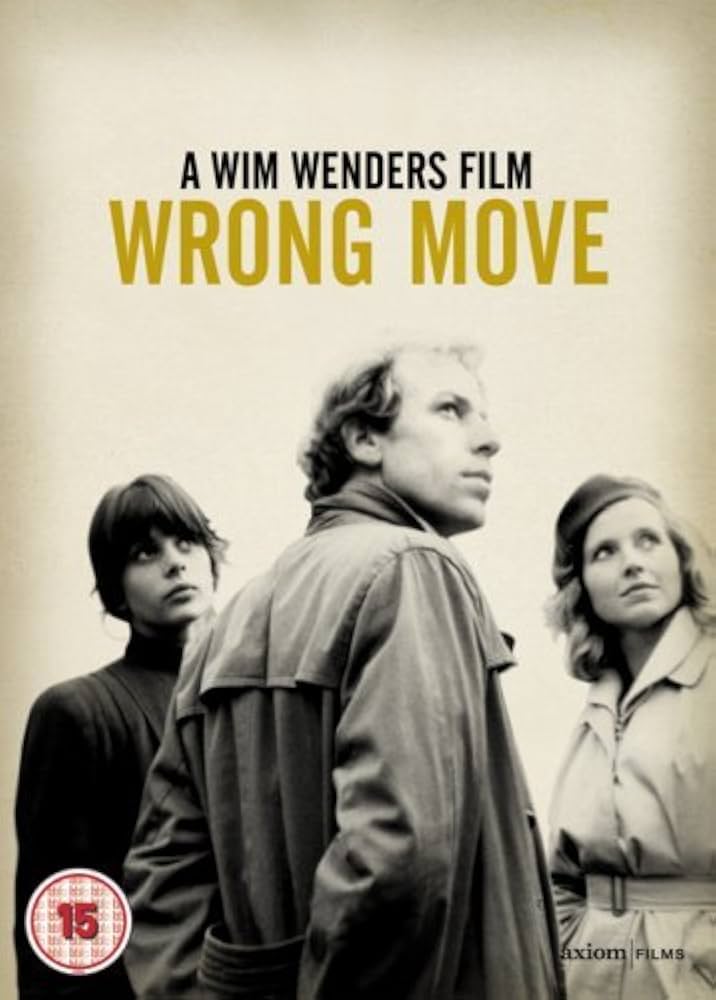
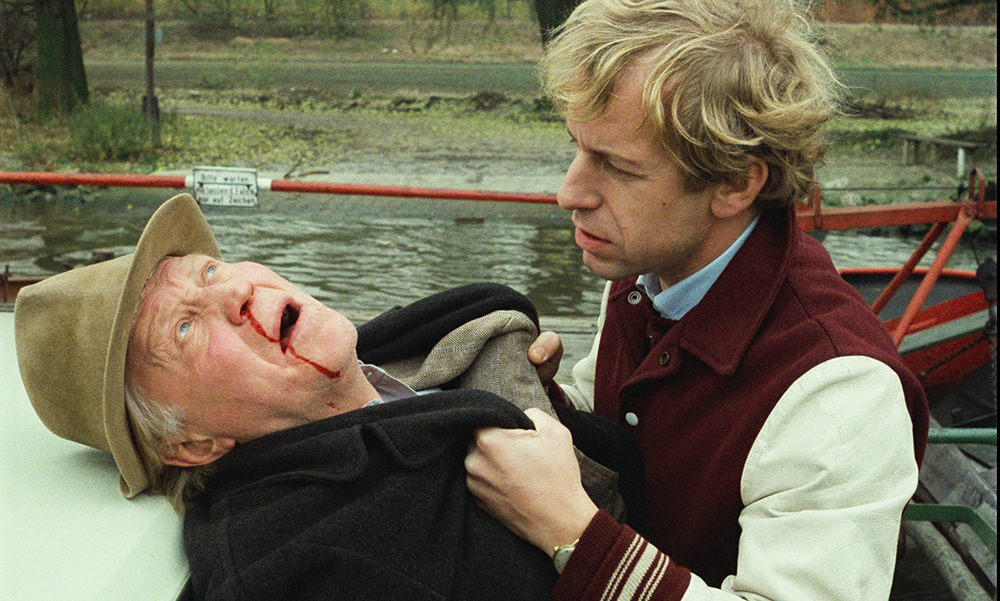
Now that we have examined the current state of affairs, let’s take a closer look at the “offensive piece” and see what it is truly about. Loosely based on Goethe’s Bildungsroman (novel of initiation) Wilhelm Meister’s Apprenticeship, it is a meditative tale about a young aspiring writer on a quest to find his place in the world. As the title itself (Wrong Move) should suggest, in Peter Handke’s adaptation the narrative focus lies on the very issue of wrongdoing, since the character grapples with the difficult recent past of his own country, personified in an older man who happens to have contributed to some of its worst atrocities. Wilhelm’s response to this knowledge is questionable as well, as he faces complex emotions at discovering the truth. So are some of his other actions on this journey of self-recognition, illustrating the human tendency to err. Although willing to do good, he is impulsive and inherently flawed. Yet, his youthful spirit drives him to confront the world in all its beauty and ugliness combined. Otherwise, it would mean to be dead. Duality lies at the very core of the human condition and Wenders’s film itself, making the whole turmoil around it appear even more ironic.
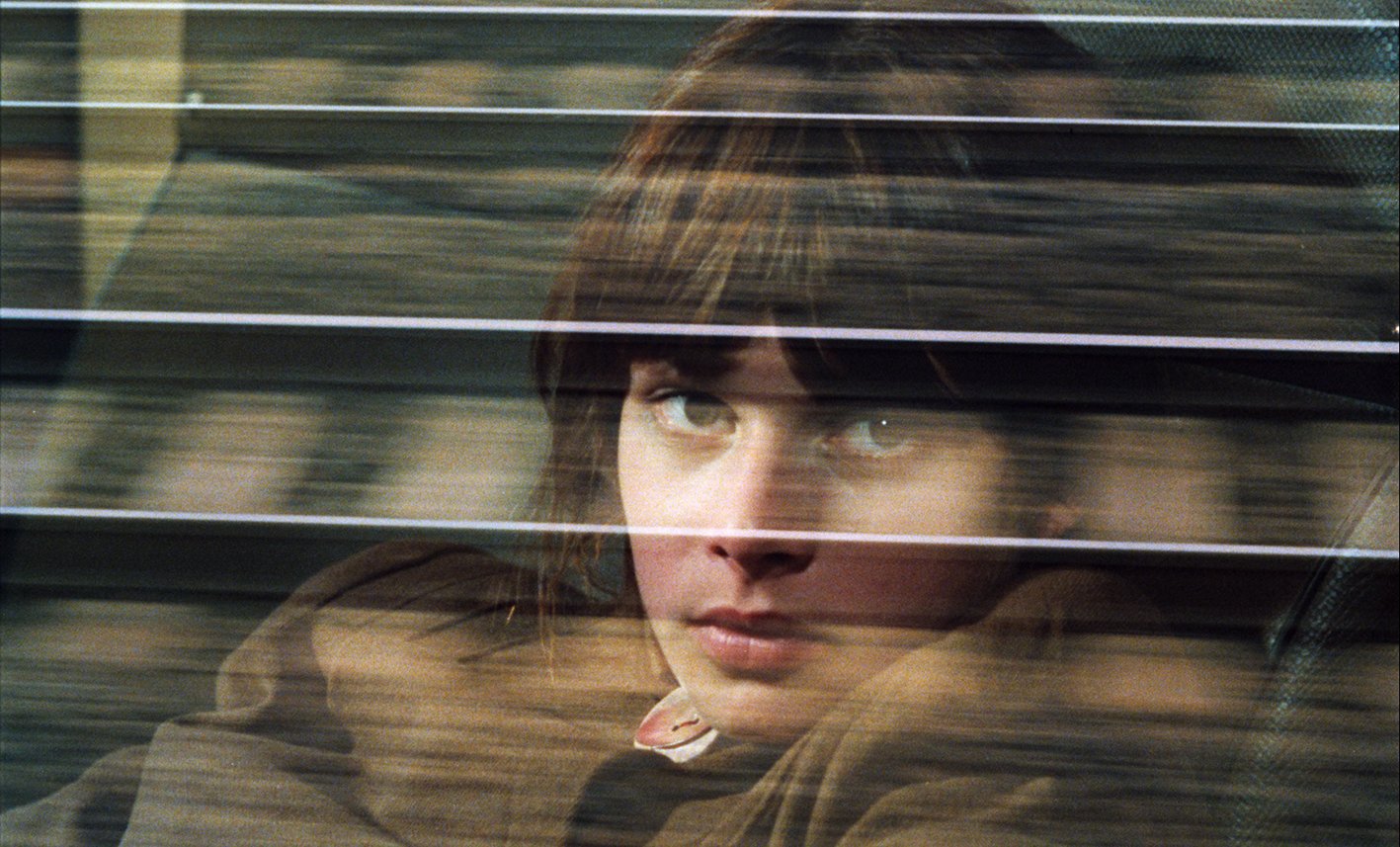
In his travels, Wilhelm meets a teenage girl who makes her living as a street performer. Instantly attracted to the handsome young man, she obsesses over him and makes sure that he is aware of her interest. Played by Nastassja Kinski in her screen debut (leading to a number of collaborations with Wenders, notably in the highly acclaimed 1984 feature Paris, Texas), the character of Mignon is a highly convincing depiction of awakening female sexuality. The presence of an attractive male, several years her elder, reaffirms the girl’s budding sexual self and makes her seek its reflection in his eyes. And that is precisely how the debated scene comes about – Mignon overtly offers herself to Wilhelm only to get rejected, following a brief moment of his hesitation.
Putting the production circumstances aside, the scene as such does not seem in any way redundant in the context of the presented story. Quite the opposite, it informs both characters’ psychological process and adds the aspect of self-awareness to their development – both in parallel and in relation to each other. Seen in its due context, the director’s struggle with the idea of cutting it out from the film’s fabric 50+ years after its making is entirely understandable.
Finally, there is the matter of the film forming part of the broader historical context of the medium and culture as a whole. Once released into circulation, a film (or, equally, a book, painting etc.) begins its own existence, entirely separate from its makers. As it becomes a source of multiple references and associations, forcefully removing it from its ecosystem destroys a whole chain of meaningful connections.
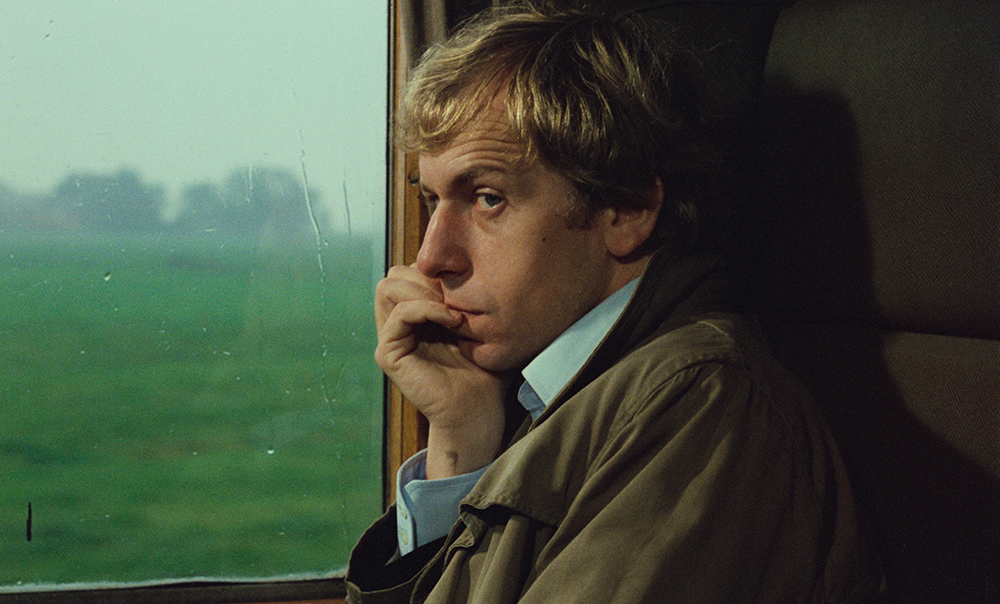
Pending the director’s decision on the controversial sequence, it must be said that Wrong Move is an important and artistically valuable feature that deserves to remain available to generations of cinema viewers to come. Unlike the current industry might suggest, unwittingly shooting itself in the foot, film at its best is not a commodity designed for mindless consumption and so it should not be recalled from the “market” like (excuse a graphic yet contextually appropriate example) a faulty feeding pump. It does not exist solely to entertain, but most of all to surprise, provoke uneasy thoughts and force the viewer to confront what otherwise might be disregarded or conveniently swept under the rug – namely, the uncomfortable complexities of human nature. Anybody who has lived a bit longer than a few years knows that pretending something does not exist does not exactly make it disappear. Sooner or later, the truth will raise its head from the sludge. If by then, our collective consciousness is no longer able to recognise it, let alone deal with it, we are in a big funky trouble.
©Anna Bajor, Tracks & Frames, 2026


 English
 polski
 português